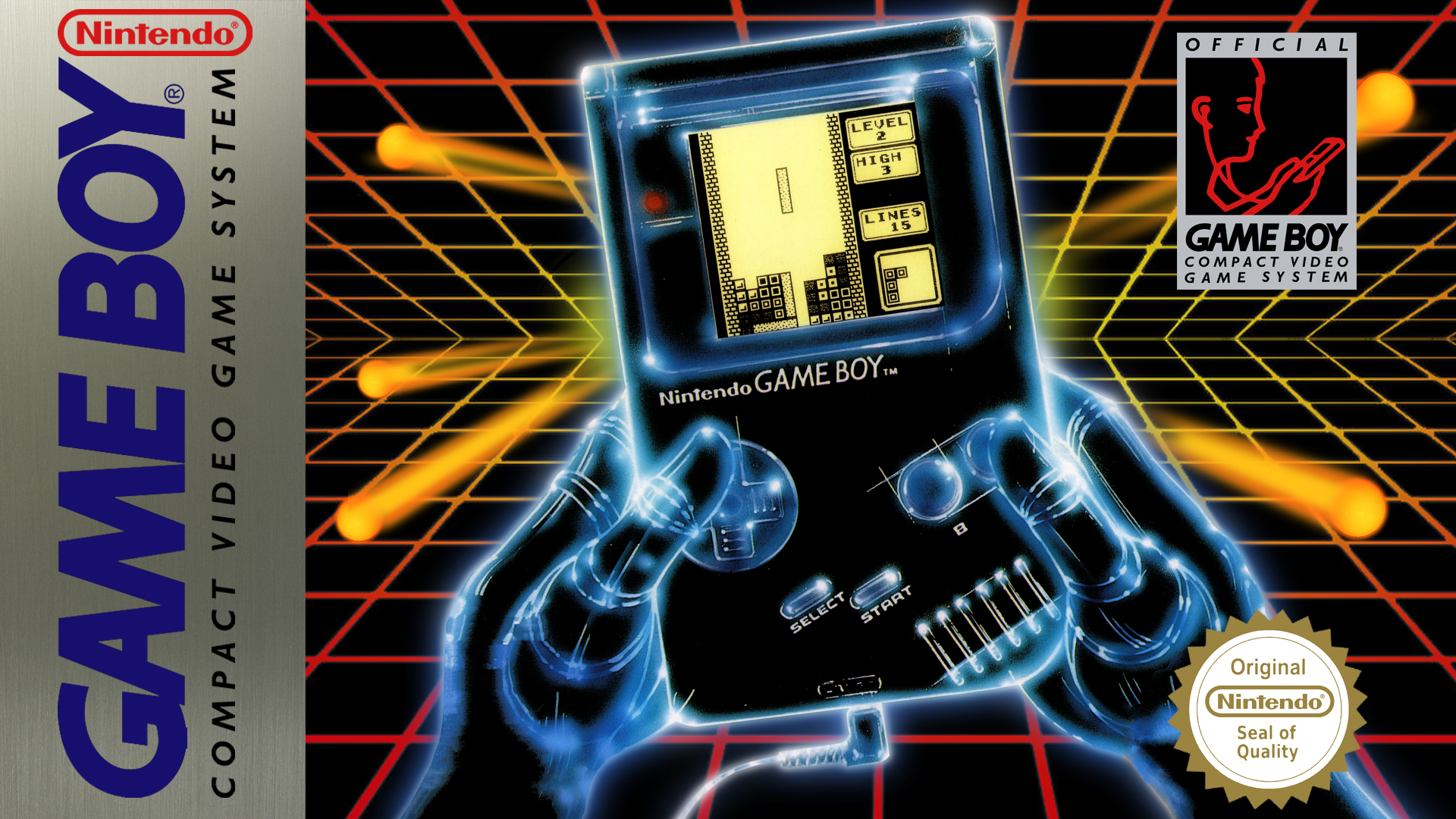
When I was a child, my parents placed strict limits on my time with video games. They meant well, and their reasons were sound. Had I had my druthers, I'd have done nothing but play video games from sunup to sundown, and I had a worrisome tendency to fly into a violent rage against any game that consistently got the better of me. (They sold my NES when I was 7, and after a similar failure to control myself with a Genesis, they banned consoles in the house until I was 18.) Also, they were salt-of-the-earth people who came of age in the early 80s in southern Oklahoma. Games then weren't what they were even by the time I was 10 or so. My mom liked Centipede, and my dad was a fan of Asteroids and Tempest. They were fun games, but that was all they were. They had premise but not plot, they never ended, and they consumed hard-earned money without satiation. Ultimately, that made them toys, and most people in that time and place, with lives of hard work ahead of them, didn't have time for toys. Additionally, they lived through the crash, and I was born right smack in the middle of it. If Atari had been a mere fad, what was going to make Nintendo and Sega any different? Best not to let the boy get wrapped up in something so transitory. They acted sensibly based on experience. But who could have known then that as I was growing up, so too were video games growing up with me? that they weren't just going to fizzle out and be buried in a landfill all over again, but press on and grow into a multibillion-dollar industry with no chance of going anywhere anytime soon? And so here we are now, at a point where authors of a certain stalwart spirit are finally taking it upon themselves to preserve the legacy of these games and consoles that have long been enjoyed but not taken terribly seriously as historical artifacts. From all over, retrospectives both academic (Nathan Altice's I Am Error) and impressionistic (the "33⅓ for video games" Boss Fight Books series) flow forth like sweet summer rain. On the former side, we have Jeremy Parish's Game Boy World 1989, chronicling the first year of the blockbuster handheld with the atypical lifespan. I have a sentimental streak a mile long for the old spinach-screened Game Boy; despite the aforementioned banishment, I was for some reason still allowed to own a Game Boy, and I became well-acquainted with it throughout the lean years.
Game Boy World 1989 features writeups for 25 games—only six of which had been released in North America by the end of 1989—but that doesn't mean the book is light on content. Even the most primitive games are rife with historical and cultural context, and Parish finds fresh angles on old gems and pays proper respect to underrated diamonds in the rough such as Kwirk, Motocross Maniacs, and Revenge of the 'Gator. One particular highlight appears in the Super Mario Land article, where Parish nimbly demonstrates how SML represents a logical culmination of both the Japanese and American chronologies of Mario releases. Clearly, he's done his homework. If the writing doesn't convince you how much love went into this labor, then surely the photography will. Each cartridge is photographed (by Parish himself) along with its original box, instruction manual, and a few screenshots of in-game action. More than any amount of words, the photos evince the greatest depth of dedication to the project; Parish has left no stone unturned in the pursuit of comprehensive historical documentation. Long after you've finished reading the book, you'll find yourself wanting to go back just to look at some of those spreads. Should the Game Boy World project continue—and so far, it is—finishing it will prove to be a daunting task; the year immediately following this one saw the number of Game Boy releases jump from 25 to 140, likely necessitating multiple volumes for 1990 and each year to come. If the books to come stay at the same level of quality, I'm in for as long as he can keep pumping them out. What Parish and a growing number of authors are doing is, I'd say, important, and the slick professionalism on display here gives me high hopes for future installments. Buy Game Boy World 1989 on Amazon here. Yes, I blanched at the $22.50 price tag too, but it's absolutely worth every penny. Due to the niche nature of the project, Game Boy World is funded almost entirely by Patreon donations; you can check out it and other passion projects by Jeremy Parish as well as contribute here. Oh, and go read USGamer every day too. It's pretty great.
At any given time, I'm absorbing works from all over the cultural spectrum. What I'm Blanking is a neat summation of those moments in my cultural journey. What I'm Reading: The Interestings by Meg Wolitzer I kind of had a sneaking suspicion when I read the description on the back cover, but at just over 100 pages in, I can confirm it: this is, I hate to say it, a White People Problems book. You know, that kind of Jonathan Franzen middle-class ennui type stuff.
Don't get me wrong, it's not a bad book, and it's peppered with similes and passages that win my approval (e.g., "tender as a change purse"), but the older I get, the less time I have for stories like this. I'm committing to it, but I have to say, it's slow goings right now. Brief plot summary: at a summer camp in the 70s, five or six kids fancy themselves the kings and queens of irony and wit and form an Algonquin Round Table Lite, christening themselves The Interestings. Once camp ends, they go their separate ways and on to varying degrees of success and/or failure, with animation wonk Ethan Figman hitting the jackpot with an autobiographical, vaguely Simpsons-esque animated show called Figland. Great, now that you're asleep, I can sneak off and get some Taco Bell. I'm trying to finish this before the S-load of books I have coming in from Amazon arrives, but prospects currently look grim. What I'm Playing: Secret of Mana
Now that I'm officially not recording Let's Plays for the foreseeable future, I can feast upon any dish the gaming world has to offer and not worry about subconsciously vetting it for series potential. It may not reflect well on me, but my first choice was straight-up comfort food. I have a great big soft spot for the once-amazing Mana series, and while I enjoy the sequel, Seiken Densetsu 3, a lot more (it's my favorite RPG of all time), I'm saving it for that space between the end of summer and the start of autumn, since September 30 marks the 20th anniversary of the Japanese release of SD3. Though I'm admittedly starting it off very Mana-heavy, I've been wanting to take a journey through some of the RPGs that either I loved in their prime or missed out on in their initial run, but playing SoM I've found that a huge roadblock to that journey might be grinding. Secret's grinding can be significantly reduced by keeping it down to one weapon per character and only leveling up essential spell elementals (Undine, Lumina, and Dryad for the girl; literally all of them for the sprite). I already barely have time to maintain a little-read blog; grinding levels in video games is waaaaaaaay low on the list of "things I want to do with what little free time I have". I currently have to get the girl's and sprite's spells up to level 7 before I move on with the story, and the feeling of dread that washes over me when I think about tackling it is honestly not that far removed from the one that accompanies the thought of doing laundry when the dirty pile is up to your waist.
This is also my first time playing Secret of Mana with the "Enhanced" patch, which changes the fixed-width font to the variable-width Chicago font recognizable from Chrono Trigger and 90s Macs, allowing for less stilted dialogue. To be honest, the dialogue doesn't have noticeably more pop with the patch than without—a testament to what Ted Woolsey was able to accomplish with significantly reduced cartridge space and virtually no time—though there are some amusing Easter eggs hidden here and there. Chip's Challenge 2 I'm about a third of the way through this game, but I'm stockpiling my thoughts on it. I'll write a full post about it after I've completed it. What I'm Listening To: Keller Williams, Vape Keller Williams has been semi-unifying his studio albums around single-word themes for so long now that, given his jam scene cred, it's kind of amazing it took this long for him to get around to one about getting high. It's a dangerous road to walk—hippies love reminding people how much they love to get high, yet there's nothing more boring than listening to hippies talk about getting high. After an instrumental opener, the trifecta of "Mantra", "The Drop", and "She Rolls" hits hard, fast, and often. Unfortunately, the rest of the album can't match that early energy, though it's nice that the hypnotic "Donuts"[1], which has been floating around by itself on Spotify for two years, finally has an album home.
John Hartford and the Dillards, "Two Hits and the Joint Turned Brown" You know how sometimes, there are certain people that you'll listen to talk about anything, either because they're so passionate about it or you love the sound of their voice? That works here as a corollary to the hippies-talking-about-getting-high thing. This song is ridiculously catchy. It's like some strange hybrid between a railroad chain-gang song, an old-time gospel hymn, and one of those kind of reggae-lite 10cc-type songs, and I don't know how it works, but it works. This gets stuck in my head all the time, especially at work, where I'm not often in a great position to be singing it out loud.
What I'm Watching: Whiplash Finally got the opportunity to Redbox this one. I'm not going to talk much about the nuts and bolts of it, just that 1) I loved it, 2) J.K. Simmons earned that Oscar, and 3) more than anything, it made me want to watch Glengarry Glen Ross again. The two movies seem very thematically similar to me. They ask a lot of the same Big Questions, like: What lengths does a person have to go to in order to be "great"? What is "great"? Who does that matter to? Is a desire to be a legend a sociopathic quality? If not inherently so, at what point does it become one? Whiplash is also one of those heightened experiences movies are great at offering up. It's grounded in reality, but there is a faint patina of slight inauthenticity that reads more as a next-level magic that only a cinematic experience can provide. Naturally, movies that do this well often end up becoming my favorite movies. Big Wind-up! (Ookiku Furikabutte)
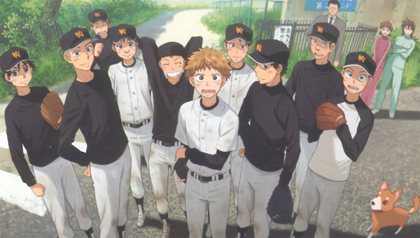
Do you like Dragon Ball Z? Do you like the long, protracted battles that span multiple episodes? Do you wish those battles were baseball games? If you answered yes, especially to the last question, you're going to love Big Windup. In a nutshell, Ren Misashi transfers to a new school after being humiliated by his old baseball team, having only been made the ace pitcher due to nepotism. When he arrives at the new school, he attracts the notice of catcher Takaya Abe, who sees that he has excellent pitch control but needs to be brought out of his sniveling, whimpering shell. It's kind of a Bull Durham-type relationship, only if the pitcher had absolutely zero ego instead of way too much. I've only watched seven episodes, and it's been a while since I checked in with it, so I may need to start over since every player on every team has a distinct personality and the show does keep up with it. My forays into anime are rare, but this is a good one, and I should really get back into it. The entire single season (26 episodes) can be watched on Hulu, either subbed or dubbed. Typically I prefer subs but in this case I went with the dub, and I'm actually not regretting it. ___________________________________________________ ¯¯¯¯¯¯¯¯¯¯¯¯¯¯¯¯¯¯¯¯¯¯¯¯¯¯¯¯¯¯¯¯¯¯¯¯¯¯¯¯¯¯¯¯¯¯¯¯¯¯¯ [1]No relation.
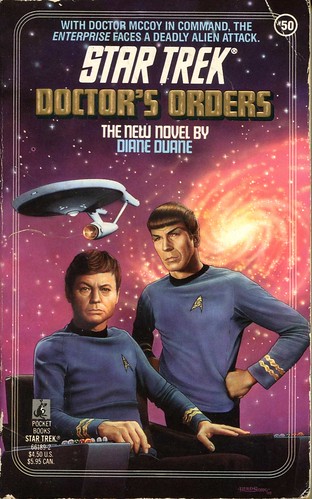
When Leonard Nimoy died, I was reminded of a book on my shelf that I'd repurchased in the near past but not read since I was probably 11 or so: Doctor's Orders by Diane Duane, the first of a handful of Star Trek trade paperbacks I read as a kid. My leisure reading has slacked off significantly in the past year-plus, and I was slow in starting this book, since it seemed a touch embarrassing to be re-entering a beloved activity with expanded-universe sci-fi—authorized fanfiction, if you're feeling particularly uncharitable. However, I'm happy to report that Doctor's Orders is even more excellent now than it was when I was on the precipice of adolescence—honestly, I'm not sure how I understood anything going on in the book back then—and the only thing that makes me upset is that it took the impetus of Leonard Nimoy dying to move me to revisit it. Obviously, going by the title, it's not the real-life Leonard that's the focus of Doctor's Orders, but the fictional one—McCoy, that is. After Bones gets back from visiting a friend in Switzerland on shore leave, the Enterprise heads off to make first contact with the races of 1212 Muscae IV, a.k.a. Flyspeck. Yes, that's races plural—Starfleet is ultra-psyched about getting all three intelligent races on this planet into the Federation, because it's the first time anyone's ever encountered a planet with three intelligent races. Those races are the Ornae, protoplasmic beings who use their own bodies as tools and building blocks; the Lahit, tree people; and the ;At, giant featureless boulders that appear shrouded in a dense fog in scans and can phase in and out of linear time. The bureaucrats at Starfleet, here portrayed in a particularly crusty and impatient way that makes you wonder how the Enterprise crew manages to make the strides for humanity it does with all that red tape in their faces, make it clear that batting anything lower than 1.000 will be viewed as a massive disappointment. With Starfleet breathing down their necks, the crew is exhausting itself trying to establish a linguistic foothold. Early conflict manifests in the form of difficulty calibrating the Universal Translator—you know, that magical piece of technobabble that renders everything for the crew in English. It's hard to imagine Doctor's Orders working as an episode of the show when for a while one of the biggest sources of conflict is basically "WE NEED MORE VERBS, DAMMIT", but on the other hand it's exactly the kind of scenario best suited to print that an author couldn't properly explore in one hour of television, making it an extra-special treat. In the same vein, there are also a lot of department head meetings that sound like a colossal bore on the face of it, but end up being very important in the way that they pull you out of the sly trap of thinking of the secondary and tertiary characters as merely second and third and fourth bananas to the captain. They're not just navigators and engineers and switchboard operators; they're department heads, and they're on the bridge because they're the best of the best and they've proven their mettle time and time again. In addition, jokes and chuckles are in plentiful supply, and there's a really nicely understated thread where Chekov nervously but proudly presents his own survey report with the gentle encouragement of his mentor Spock. Throughout the crew's hard work, McCoy needles Captain Kirk about working too hard and getting the proper amount of rest, implying it should be much easier for the captain to do so since all he has do is sit in the big comfy chair and wait for data to pour in. After one jab too many, Kirk turns the tables on Bones and gives him the conn while he goes planetside. It's a bit of a shaky premise, but Duane is so comfortable with the bridge crew's dynamic and confident in Kirk's reasoning for leaving McCoy in command that you end up going along with it without any major complaints. Of course, things go far more awry than expected, first with Kirk disappearing from all sensor readings, then the Klingons arriving, then an even greater threat showing up, and Starfleet all the while wanting to know how the hell the doctor got to be in charge of the ship and what he intends to do about it, and Dr. McCoy learns the (very) hard way that uneasy lies the head that wears the crown. McCoy is the star here, but another character that subtly gets a lot of great development is Uhura. Duane is smart to recognize that "Communications Officer" means a lot more than sitting at the switchboard opening transmissions and whatnot. She might well be the most important character in the establishment of linguistic understanding between the Federation and the three races of Flyspeck, and she's also full of great tactical ideas to help McCoy and Spock deal with the Orion pirates. Every main bridge crew character gets at least one juicy passage in the limelight, but outside of the typical Kirk/Spock/McCoy triumvirate, she definitely gets the biggest steak to chew on, and it's a treat made all the more pleasant by its unexpectedness. I can see why young Jess really dug this book, even if he only comprehended about a quarter of it. It's of a piece with the other Star Trek works that were resonating with me at the time, in the way that it's light on action (only one space battle) and heavy on diplomacy and consciously choosing to push back against your baser human urges. The first chapter is an iffy start, and it wraps up a pinch too tidily with a deus ex machina (albeit a really cool one), but everything in-between is solid. Of the ten or so TOS Pocket Books I read in my pre-adolescence, this was not only the first but my favorite, and as I continue to explore this kick I'm on, it's set a high bar for what I expect from other Trek stories. Parts that amused/intrigued me that don't fit anywhere above: McCoy's first transmission with Commander Kaiev ... the reason the Klingons are interested in the planet ... McCoy describing the Orion pirate ship as "a brick covered in frozen spaghetti" ... "McCoy thought about writing a paper on dehydration in personnel on battle stations" (p. 250) ... the apparent importance of arsenic to the Klingon diet. Recommended if: You've ever been interested in the potential obstacles facing a first contact ... you like slightly goofy "what if?" scenarios ... you're fascinated by how the crew comports itself when danger is afoot and their captain isn't around ... you're intrigued by large swaths of text where Captain Kirk is absent from the action. Star Trek TOS #50: Doctor's Orders Written by Diane Duane Published June 1990 290 pages Doctor's Orders is available for the usual one cent plus shipping from numerous Amazon Marketplace sellers, and also in a Kindle edition for six dollars, which is actually kind of a ripoff when you realize it's $4.50 on the spine, so don't do that.